Your Complete Guide to Skin Health in Molonglo Valley – Prevention, Checks & Care
Skin does far more than cover your frame. It handles UV rays, heat, bacteria, and real knocks around the clock.
For people in Molonglo Valley, that workload is heavier than most. Canberra sits at a higher altitude than coastal cities. That thins the atmosphere’s UV filter. Radiation is stronger here year-round.
Skin cancer is now the most frequently diagnosed cancer in Australia. That fact alone makes skin health molonglo valley families need to address a genuine priority.
The good part? Most skin cancers respond very well to treatment when they are caught at an early stage. Knowing your risks and regular habits change outcomes greatly.
At Molonglo Valley Medical Centre, our GPs work with patients daily on regular skin checks, skin problem care, and cancer stopping it before it starts. This guide brings it all together.
Skin Health Molonglo Valley: Why This Suburb Carries Specific Risks
Molonglo Valley was built around outdoor living. Parks, cycling paths, and open sports grounds are used every day. For residents of all ages, that means regular direct UV exposure week after week.
Canberra’s UV strength often ranks among the highest recorded in the southern hemisphere during warmer months. The lower moisture and higher height strip away some of the sun-safe haze that coastal areas benefit from.
Skin cancer is the most common cancer in Australia. The ACT’s outdoor-active people is not immune to those numbers.
The distinction that matters most is timing. A skin cancer found and treated early is, in the vast most of cases, fully manageable. Left to develop, the same cancer becomes a much harder problem.
What Shapes Your Personal Skin Cancer Risk?
Skin cancer risk is not the same for every person. Some traits and histories push it higher. Knowing where you sit allows your GP to tailor the right watching plan.
Born with Traits That Increase Risk
• Skin that turns red quickly in sun rather than tanning
• Light-coloured eyes — grey, pale blue, or green
• Hair that is by nature fair, blonde, or red
• More than fifty moles spread across your body
• A parent, sibling, or child who has been treated for melanoma
Local and Lifestyle Factors That Add to Risk
• Years of outdoor work or hobbies with uneven sun cover
• Serious sunburns during youth — these affect skin cell health for decades
• Past use of solarium equipment or UV tanning beds
• A weakened immune system from long-term medicine or chronic illness
What You Can Actually Change
You cannot rewrite your genetic code or reverse childhood sun damage. But the cover you build into each day from now directly lowers your risk going forward.
Booking regular skin checks is where personal effort meets expert eyes.
Regular Skin Checks: The Medical Advantage
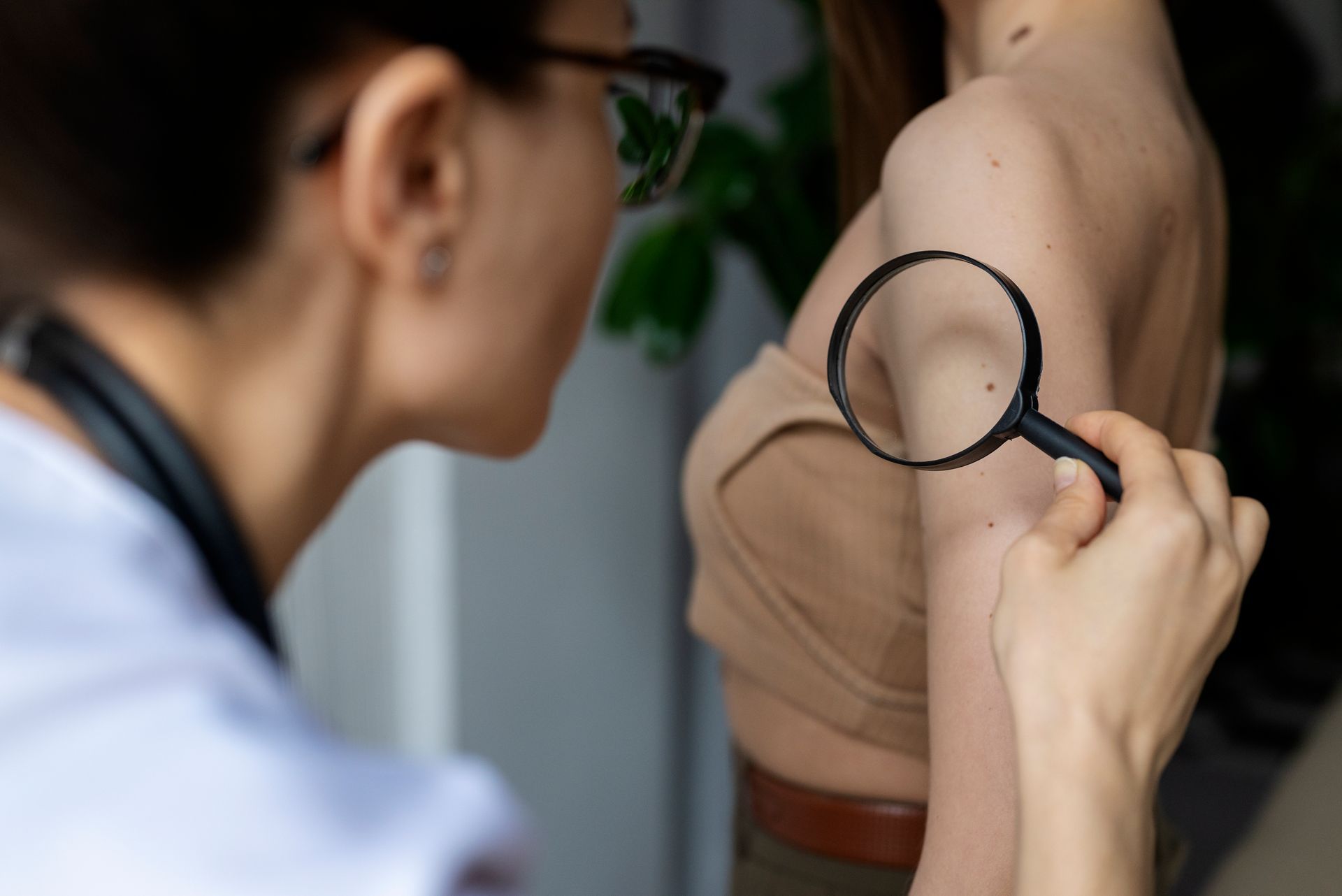
Looking at your own skin in a mirror gives you one angle and one level of detail. A trained GP checking you with dermoscopy gives you something fully different.
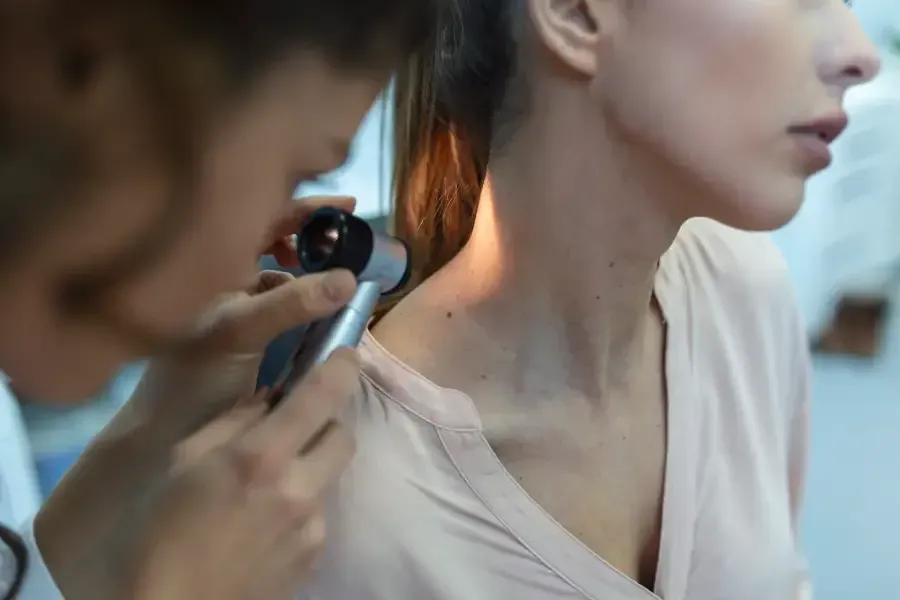
Dermoscopy uses a handheld device to see inside a lesion. Signs that look fine to the eye can show up clearly this way.
At Molonglo Valley Medical Centre, skin checks include full-body digital imaging. Your doctor creates a visual record at your first visit. They compare it each time you return. Gradual changes do not go missed.
How Often Should You Come In?
• Low personal risk, no concerning history: every two years is fine
• Adult aged 18 or over with regular outdoor time: once a year is our standard advice
• Higher concern — many moles, fair skin, or a removed lesion: six-monthly reviews
• Prior melanoma or strong family history: your GP will set a three to six month schedule
Building a Home-Check Habit Between Visits
A monthly self-check takes less than five minutes and trains you to notice what is normal for your skin.
Look for moles where the two halves do not sit the same on both sides. Notice any spot with a blurred or uneven edge. Watch for a colour pattern that mixes several shades within one small area. Make a note of anything that has grown past roughly pencil-eraser width. Most vitally, take any lesion that itches, bleeds, or does not settle as a clear signal to book an visit before your next scheduled check.
Self-checks and regular skin checks work as a pair — neither replaces the other.
Sun Safety Tips That Fit Into a Normal Day
Sun safety tips are most useful when they become a habit — habits that happen without a second thought rather than a reaction to hot weather.
UV in Canberra is strong in autumn and spring, not just summer. ARPANSA publishes a daily UV reading for your area. When it hits level three or above, cover is needed. That happens even on overcast days.
Five Habits Worth Making A habit
• Wear close-weave clothing with long sleeves. Physical cover beats sunscreen for long outdoor sessions
• Apply SPF 30 or higher sunscreen each morning. Do this even on days you do not plan to be outside
• Pick a hat with a full brim on all sides. A cap with a front peak leaves your neck and ears exposed
• Step into shade during mid-morning to mid-afternoon. That is when UV levels peak
• Wear wrap sunglasses with UV-rated lenses. This guards your eyes and the skin around them
Getting Sunscreen Right
Most adults spread far less sunscreen than the tested amount on the label. A light or thin coat does not deliver the stated SPF cover.
Apply it well and allow roughly 20 minutes for soaking in before heading outside. Put it on again after swimming, after a session of heavy exercise, or when more than two hours have passed since your last use.
A Note for Parents in Molonglo Valley
Children raised in a high-UV area like Canberra build up UV exposure that their bodies carry forward into adulthood. Healthy habits built in childhood become the base for lower lifetime skin cancer risk.
Use high-factor sunscreen on children before outdoor play. Build shade breaks into the hottest part of the day. A hat and sun-safe shirt at water play and sport make a real difference.
Skin Condition Care: More Than Just Cancer
Many patients at Molonglo Valley Medical Centre come in for skin problem care that has nothing to do with cancer. Daily skin problems affect confidence, sleep, and quality of life in real ways.
The right assessment is the starting point. A GP assessment tells you exactly what is going on. No more guessing with products.
What Our GPs Commonly Manage
• Acne — from mild breakouts to stubborn cystic cases needing medicine treatment
• Eczema — finding your triggers, supporting the skin barrier, and handling flares with the right treatment
• Psoriasis — sustained skin problem care matched to how widespread and bad the problem now is
• Rashes and bugs — correct assessment so treatment targets the cause, not just the surface
When a GP Visit Makes More Sense Than Another Chemist Trip
If a skin issue has persisted beyond three weeks without meaningful change for the better, a GP visit is a better next step than another product purchase.
Also book in if the problem is spreading to new areas, getting in the way of with sleep, or becoming really painful. These patterns suggest the problem needs medicine care rather than over-the-counter care.
Read the Full Skin Health Blog Series
This article is the base. Each cluster blog below goes into detail on one specific area:
Skin Health and Cancer Prevention in Molonglo Valley: What Every Resident Should Know
Regular Skin Checks Are Critical: Early Detection, What Doctors Look For & How Often
Common Skin Conditions Explained: Acne, Eczema, Psoriasis & When to See Your GP
Understanding Skin Cancer Risk Factors: Family History, Skin Type, Sun Exposure & Lifestyle
Frequently Asked Questions
Q1. What actually happens during a skin check at Molonglo Valley Medical Centre?
Your GP works through your skin from head to toe from the scalp to the soles of your feet. A dermoscope is used to examine moles and spots in magnified detail. Digital images are taken at your first visit to create a baseline, and your doctor compares those images at each return visit so any gradual shifts in a lesion are visible. A full check takes around 30 minutes.
Q2. Why are GP-level regular skin checks needed if I check my skin at home?
Home checks are done with the naked eye in daily lighting. Your GP uses a close-up view and controlled lighting that reveals the internal structure of a lesion — details simply not visible otherwise. Many skin cancers at their most treatable stage look like normal spots to the untrained eye. The two approaches complement each other; neither replaces the other.
Q3. Is there a Medicare rebate for skin checks at this practice?
Skin checks with a GP are covered by Medicare in most situations. Molonglo Valley Medical Centre bulk bills eligible patients, a category that includes children, pensioners, and current Healthcare Card holders. Call reception before your visit to confirm your cover and any gap fee.
Q4. My skin shows no obvious changes. Is there still value in coming in for a check?
There is significant value, and this is actually the best time to come. Early skin cancers rarely produce obvious symptoms or dramatic visual changes. They are found by trained eyes looking at structural features that are not apparent on the surface. Coming in for regular skin checks before anything looks wrong is precisely when the medical benefit is greatest.
Q5. My child has had eczema since early childhood. Can your practice support ongoing care?
Managing childhood eczema is a regular part of what our GPs do. We look at the whole situation — what is triggering flare-ups, how well current treatments are working, and whether a step up in care is needed. When a child needs specialist care, we arrange the referral.
Take Action on Your Health Today
Your health matters at every stage of life. From routine check-ups and preventive care to managing ongoing health concerns, early medical support can make a real difference. At Molonglo Valley Medical Centre, our experienced GPs provide professional, compassionate care for individuals and families in a comfortable environment.
📅 Book your appointment today
Contact:02 5110 3155
https://www.molonglovalleymedicalcentre.com.au/contact
📧 Email Us: reception@molonglovalleymedicalcentre.com.au